
 By Micheal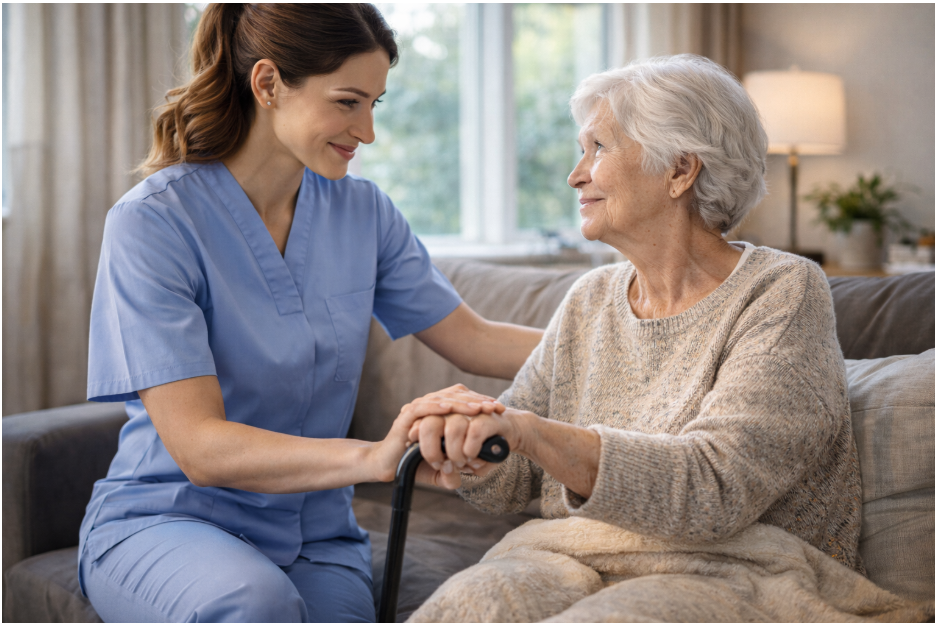
Most debates regarding the evolution of healthcare tend to focus on the ‘glamour’ of high-tech innovation, specifically the breakthroughs in genetic engineering, artificial intelligence, and personalized drug therapies. We rarely talk about the person sitting at a kitchen table at 7:00 a.m., helping an 84-year-old safely manage her morning insulin. But as we move through 2026, it’s becoming clear that these Direct Care Workers are actually at the heart of the most important shift in modern healthcare.
The Care Economy Has Arrived — and It’s Bigger Than We Expected
By 2026, more than 10,000 Americans are turning 65 every single day, a demographic wave that has been building for decades and is now cresting with full force. The global picture is equally striking: the World Health Organization projects that the number of people aged 60 and over will double by 2050, reaching 2.1 billion. This is not a distant forecast — its pressure is felt right now in staffing shortages, hospital discharge backlogs, and families scrambling to find competent, trustworthy home care.
The response from the labor market has been notable. The U.S. Bureau of Labor Statistics identifies home health and personal care aides as one of the fastest-growing occupational categories in the country, projecting a 22% employment growth between 2022 and 2032. Policymakers, healthcare systems, and families have begun to recognize what economists call the “care economy” — a sector whose output, while rarely measured in GDP, is fundamental to the quality and longevity of human life.
What a Direct Care Worker Actually Does
The title “Direct Care Worker” encompasses a wide spectrum of professionals: home health aides, personal care assistants, certified nursing assistants, and adult day service workers. What unites them is proximity — they work closer to patients than almost any other healthcare provider. They observe subtle changes in mood, appetite, and mobility that a quarterly doctor’s visit would entirely miss. They are, in many ways, the early-warning system of the healthcare continuum.
Because of this closeness, a complex skill set is required. Medication management, infection control measures, fall prevention techniques, emergency response protocols, and the complex ethics of working in a person’s home are all things that a DCW needs to be aware of. They also require emotional intelligence, which is the capacity to treat people with dignity while they may be weeping for their own freedom.
Certification as the Bedrock of Safe Care
As we navigate the complexities of an aging global population, the role of the caregiver has moved from the sidelines to the center of the healthcare conversation. In 2026, “Direct Care” isn’t just a job title; it’s a commitment to preserving human dignity through technical and emotional mastery. The formal certification process — governed by standards from organizations such as the National Association of Health Care Assistants (NAHCA) — ensures that workers are proficient in everything from infection control to ethical boundaries before they ever set foot in a patient’s home.
For those entering this vital field, the gap between passing a written exam and performing well under real-world conditions has historically been a source of anxiety — and, sometimes, genuine patient risk. Aspiring workers are increasingly turning to simulation-based study tools to bridge that gap. Engaging with a realistic DCW practice test allows aspiring workers to refine their situational judgment — working through scenario-based questions that mirror the ethical gray areas, time-pressure decisions, and clinical fundamentals they will face daily. The goal isn’t just to pass; it’s to enter the workforce with the precision and empathy required for high-stakes caregiving.
Why 2026 Is a Turning Point
Several converging forces make this moment particularly significant. Post-pandemic healthcare systems are still reorienting around home-based and community care models. Reimbursement frameworks, particularly under Medicaid and Medicare Advantage, are increasingly including coverage for in-home services. And a growing body of research confirms what families have long known intuitively: people recover faster, live longer, and maintain sharper cognitive function when they remain in familiar home environments.
Direct Care Workers are the linchpin of this model. Without a well-trained, adequately certified workforce, none of the structural investment in home-based care can deliver on its promise.
Recognizing the Unsung
The longevity revolution is not happening in a laboratory. It’s happening in living rooms, in kitchen routines, in the careful hands of a DCW helping someone button a shirt. These professionals deserve the professional respect, compensation, and rigorous preparation that match the weight of the work they carry. As investment flows into healthcare technology and infrastructure, the most urgent investment may be the simplest: ensuring that every person who enters this field does so fully equipped — certified, practiced, and prepared to serve.