
 By Micheal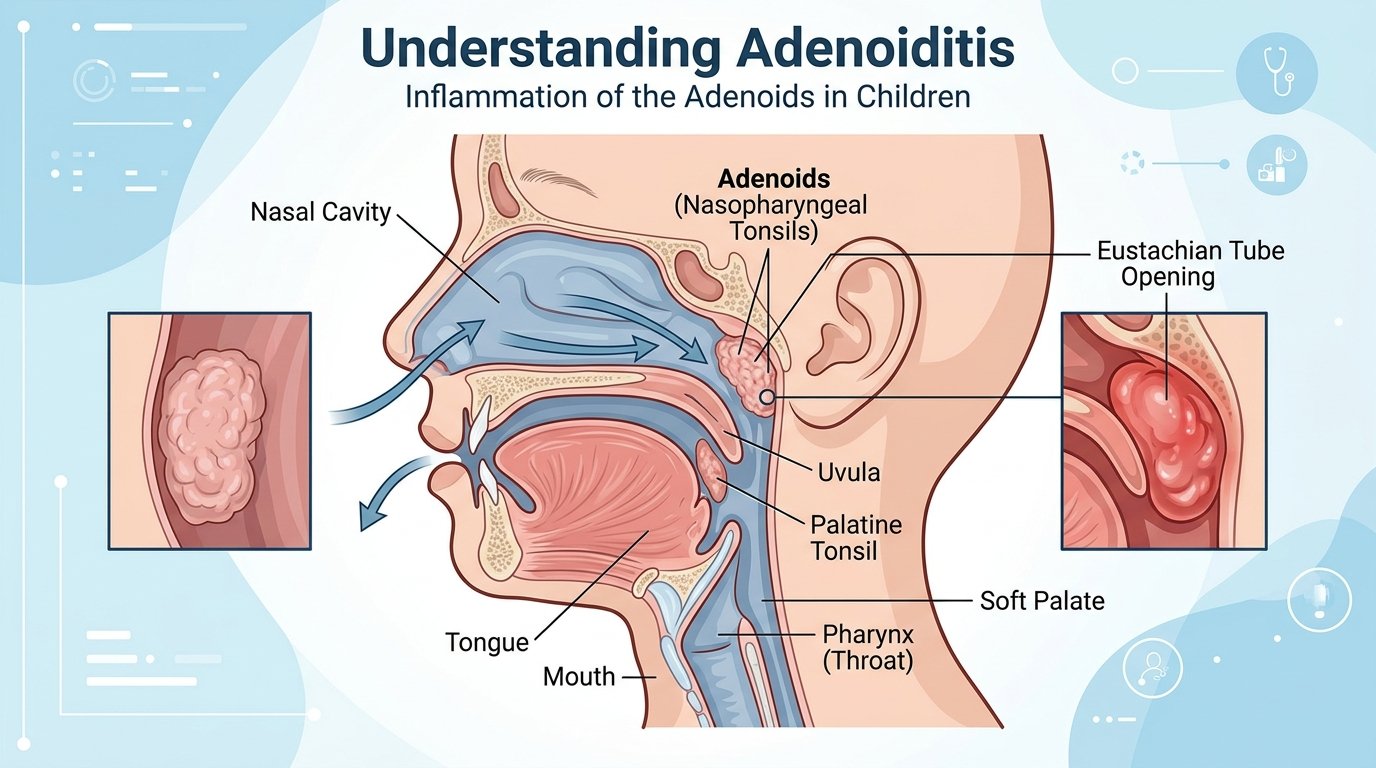
Adenoiditis is an inflammatory condition affecting the Adenoids, small immune tissues located behind the nose in the upper throat. These glands help defend the body against bacteria and viruses, especially during childhood. When the adenoids become infected or enlarged, it can lead to symptoms such as nasal congestion, difficulty breathing, frequent ear infections, sore throat, snoring, and persistent cough. Adenoiditis may occur as acute (short-term) or chronic (long-lasting) inflammation.
Common causes include bacterial or viral infections, allergies, environmental irritants, and genetic predisposition. Diagnosis typically involves a physical examination, review of medical history, and sometimes imaging tests or throat cultures. Treatment depends on severity and may include antibiotics for bacterial infections, nasal decongestants, pain relievers, or surgical removal of the adenoids (adenoidectomy) in recurring cases. Early recognition and treatment help prevent complications and improve breathing, sleep, and overall health—particularly in children.
Adenoiditis might not be a term you hear every day, but it’s an issue that affects many people, especially children. The adenoids are small lumps of tissue located at the back of the nasal cavity. They play a role in fighting infections and supporting the immune system. However, when these glands become inflamed or infected, it can lead to a range of uncomfortable symptoms and health issues.
Understanding adenoiditis is crucial for parents and caregivers alike. It helps you recognize signs early on and seek appropriate treatment before complications arise. Whether your child has been experiencing frequent ear infections or persistent nasal congestion, gaining insight into this condition can make all the difference in their well-being. Let’s dive deeper into what adenoiditis entails—its symptoms, causes, diagnosis methods, and available treatments—to empower you with knowledge that could enhance your family’s health journey.
Definition and explanation of adenoids
Adenoiditis is a condition that can significantly impact health, especially in children. By understanding its symptoms, causes, and treatment options, parents and caregivers can make informed decisions about seeking care.
If your child exhibits signs of adenoiditis, such as persistent nasal congestion or difficulty breathing through the nose, it’s essential to consult a healthcare provider. Early diagnosis often leads to more effective management of the condition.
Treatment varies based on severity and frequency of episodes. Whether opting for antibiotics when necessary or considering surgical intervention like an adenoidectomy, knowing the available options helps in maintaining quality of life.
Awareness is key; being knowledgeable about adenoiditis empowers families to take proactive steps toward better health for their loved ones.
Adenoids are small masses of lymphatic tissue located at the back of the nasal cavity. They play a role in the immune system, particularly during early childhood.
These glands help trap harmful bacteria and viruses that enter through the nose and mouth. In essence, adenoids act as a first line of defense against infections.
As children grow, their adenoids typically shrink. By adulthood, they may be barely noticeable or even absent altogether. This natural reduction often leads to fewer respiratory issues as one matures.
However, when adenoids become enlarged due to various factors like infections or allergies, they can lead to discomfort and health problems such as obstructed breathing or frequent ear infections. Understanding their function is crucial for recognizing potential complications related to adenoiditis later on.
Importance of understanding adenoiditis
Understanding adenoiditis is crucial for several reasons. First, it aids in early detection and treatment. Recognizing symptoms promptly can prevent complications that may arise from untreated infections.
Moreover, awareness about this condition can help parents make informed decisions regarding their child’s health. Knowledge empowers families to seek medical advice when needed, ensuring timely intervention.
Adenoiditis often overlaps with other respiratory issues like allergies or sinus infections. Understanding its distinct characteristics allows for more effective management of these related conditions.
Finally, education on adenoiditis fosters healthier lifestyles by encouraging preventive measures such as proper hygiene and avoiding allergens. This proactive approach can significantly reduce the risk of developing recurrent infections in children.
Symptoms of Adenoiditis
Adenoiditis manifests through a variety of symptoms that can significantly impact daily life. The most common signs include nasal congestion, difficulty breathing, and a persistent cough. Children often exhibit these symptoms alongside ear infections or sinus issues.
Acute adenoiditis typically arises suddenly and may present with fever and sore throat. This form usually resolves quickly with appropriate treatment.
In contrast, chronic adenoiditis lingers over time. Symptoms may be less intense but persist longer, leading to fatigue or sleep disturbances due to obstructed airflow during the night.
Foul-smelling breath is another indicator that might surprise parents when noticing changes in their child’s health condition. Recognizing these differences early can guide effective management and improve overall well-being for those affected by this condition.
Common symptoms
Adenoiditis often presents a range of symptoms that can be distressing for both children and parents. One of the most noticeable signs is nasal congestion. This occurs when the inflamed adenoids block airflow through the nasal passages.
Children may also experience difficulty breathing, especially during sleep. Snoring or noisy breathing at night is common in cases of adenoiditis.
Frequent sore throats and ear infections can accompany these symptoms due to close anatomical relationships between the ears, throat, and adenoids.
Fever may be present as well, particularly with acute cases resulting from infections.
You might notice changes in your child’s voice too; it can sound stuffy or muffled as if they have a cold that just won’t go away. Recognizing these signs early can help you seek appropriate care sooner rather than later.
Differences between acute and chronic adenoiditis
Adenoiditis can be categorized into two main types: acute and chronic. Understanding the differences between them is crucial for effective management.
Acute adenoiditis often arises suddenly, typically following a viral or bacterial infection. Symptoms like fever, sore throat, and nasal congestion appear quickly. This type usually resolves within a few days to weeks with proper care.
Chronic adenoiditis, on the other hand, lingers over time. It may develop after multiple episodes of acute infections or due to persistent inflammation. Individuals might experience ongoing nasal obstruction, sleep disturbances, and recurrent ear infections.
While both types share some symptoms, their duration and frequency set them apart significantly. Identifying whether adenoiditis is acute or chronic helps guide treatment decisions more effectively.
Causes of Adenoiditis
Adenoiditis is often triggered by various factors that lead to inflammation of the adenoids. One of the most common causes is infections, both bacterial and viral. These pathogens can invade the tissue, resulting in swelling and discomfort.
Allergies play a significant role as well. Individuals exposed to allergens like pollen, dust mites, or pet dander may experience heightened sensitivity that aggravates adenoid tissues.
Environmental conditions also contribute to this condition. Living in areas with poor air quality can irritate the nasal passages and ultimately affect adenoid function.
Lastly, genetics cannot be overlooked. Some children may have a hereditary predisposition to develop respiratory issues that increase their risk for adenoiditis. Understanding these underlying causes allows for better management strategies tailored to individual needs.
Bacterial and viral infections
Bacterial and viral infections play a significant role in the development of adenoiditis. These infections can cause inflammation and swelling of the adenoids, leading to various health issues.
Bacteria such as Streptococcus or Staphylococcus often trigger acute cases. When these germs invade the body, they make it hard for the immune system to keep up. This results in soreness, fever, and difficulty breathing through the nose.
On the other hand, viral infections like the common cold are also culprits. They tend to be more prevalent but usually result in milder symptoms compared to bacterial infections. However, repeated viral attacks can weaken immunity over time.
Understanding how these pathogens affect adenoid health is vital for timely intervention and management. By identifying whether an infection is bacterial or viral, appropriate treatment options can be pursued effectively.
Allergies and environmental factors
Allergies and environmental factors significantly contribute to the onset of adenoiditis. Many children are particularly vulnerable due to their developing immune systems. Common allergens, such as pollen, dust mites, or pet dander can trigger inflammation in the adenoids.
Exposure to pollutants also plays a role. Air quality is a crucial factor that can exacerbate respiratory issues. Pollutants from vehicles and industries may lead to chronic irritation in sensitive individuals.
Seasonal changes often see an uptick in allergy-related symptoms. This fluctuation can cause swelling and discomfort in the adenoids, making it essential for parents to monitor their children’s reactions during peak allergy seasons.
Maintaining a clean living environment is vital. Regularly washing bedding and using air purifiers can help reduce exposure to common allergens and minimize risk factors linked with adenoiditis.
Genetics
Genetics can play a significant role in the development of adenoiditis. Individuals with a family history of respiratory issues or allergies may be more prone to this condition. The inherited traits related to immune system function and response can affect how effectively the body combats infections.
Certain genetic factors might predispose someone to chronic inflammation, making them susceptible to recurrent bouts of adenoiditis. This could lead to a cycle where symptoms persist due to an underlying genetic vulnerability.
Research continues into specific genes that may influence susceptibility. Understanding these hereditary patterns can provide insights for families dealing with recurring health problems, allowing for better prevention strategies tailored to individual risks linked to genetics.
Diagnosis of Adenoiditis
Diagnosing adenoiditis typically begins with a thorough physical examination. A healthcare provider will look for signs of swelling and inflammation in the throat area.
Medical history plays a crucial role. Knowing about recent illnesses, allergies, or persistent symptoms helps doctors make informed decisions.
In some cases, imaging tests like X-rays may be ordered to assess the size of the adenoids. These images provide valuable insight into any abnormalities that could be causing discomfort.
Lab tests might also be conducted if an infection is suspected. A throat culture can identify specific bacteria or viruses responsible for the condition.
This comprehensive approach ensures that medical professionals accurately diagnose adenoiditis and tailor treatment options effectively based on individual needs.
Physical examination and medical history review
A thorough physical examination is key in diagnosing adenoiditis. The healthcare provider will start by examining the throat, looking for signs of inflammation or swelling in the adenoids.
They may use a lighted instrument to get a better view. This visual assessment helps identify any obstruction that could be affecting breathing or swallowing.
Medical history plays an equally important role. The doctor will ask about symptoms, duration, and severity. Details like recurrent ear infections or respiratory issues provide valuable context.
Your child’s allergies and family medical history can also shed light on potential causes. Understanding these factors helps shape an accurate diagnosis and tailor treatment effectively.
Ultimately, this comprehensive approach ensures no detail goes unnoticed in addressing adenoiditis properly.
Imaging tests and lab tests
Imaging tests and lab tests play a crucial role in diagnosing adenoiditis. When symptoms persist, healthcare providers often recommend these examinations to get a clearer picture of what’s happening.
X-rays are commonly used to visualize the size and condition of the adenoids. This imaging can reveal enlargement or inflammation that may contribute to breathing difficulties or chronic infections.
In some cases, a CT scan offers more detailed images. It provides insight into the surrounding structures, helping doctors assess complications that might arise from enlarged adenoids.
Lab tests may also be conducted to identify any underlying infections. A throat culture can determine if bacteria or viruses are at play, guiding appropriate treatment plans tailored to specific needs.
These diagnostic tools help ensure an accurate diagnosis, paving the way for effective interventions suited for each individual situation.
Treatment Options for Adenoiditis
When it comes to treating adenoiditis, the approach often depends on whether the condition is acute or chronic. For bacterial infections, antibiotics are typically prescribed. They target the specific bacteria causing inflammation and help alleviate symptoms.
Nasal decongestants can provide quick relief by reducing swelling in nasal passages. This makes breathing easier and helps clear drainage from the nose and throat.
Pain relievers may also be recommended to manage discomfort associated with adenoiditis. Over-the-counter medications like ibuprofen or acetaminophen can effectively reduce fever and soothe pain.
In persistent cases where other treatments have failed, a surgical option called adenoidectomy might be considered. Removing the enlarged adenoids can lead to significant improvement in quality of life for those affected by chronic symptoms. It’s essential for caregivers to consult healthcare professionals when determining the best course of action tailored to each individual’s situation.
Antibiotics for bacterial infections
When adenoiditis is caused by bacterial infections, antibiotics are often the go-to treatment. These medications target the specific bacteria responsible for the infection, helping to alleviate symptoms and promote recovery.
It’s important to consult a healthcare professional before starting antibiotics. They will determine whether the infection is indeed bacterial or if it has other underlying causes. Inappropriate use of antibiotics can lead to resistance, making future treatments less effective.
Common antibiotics prescribed include amoxicillin and penicillin. The choice depends on individual cases and any known allergies a patient may have. Patients typically notice improvements within days of starting treatment.
Alongside medication, staying hydrated and resting can aid in faster recovery. While antibiotics work effectively against bacterial infections, they do not help with viral ones, which makes accurate diagnosis essential for proper management of adenoiditis.
Nasal decongestants and pain relievers
Nasal decongestants are vital for alleviating the discomfort associated with adenoiditis. They work by shrinking swollen blood vessels in the nasal passages, facilitating easier breathing. These medications can be particularly helpful during acute flare-ups.
Over-the-counter options like pseudoephedrine and phenylephrine provide quick relief. However, they should be used sparingly to avoid rebound congestion.
Pain relievers also play a crucial role in managing symptoms. Medications such as ibuprofen or acetaminophen help reduce fever and minimize throat pain caused by inflammation.
Always consult a healthcare professional before starting any treatment regimen. Each individual may respond differently to these medications, making personalized care essential for effective symptom management.
Surgical removal of the adenoids (adenoidectomy)
Surgical removal of the adenoids, known as adenoidectomy, is often recommended for those suffering from chronic or severe adenoiditis. This procedure can provide significant relief and improve quality of life.
During an adenoidectomy, a surgeon will gently remove the swollen tissue at the back of the throat. The operation is usually performed under general anesthesia, ensuring that patients remain comfortable throughout.
Recovery time varies but many children bounce back quickly. They may experience some discomfort and mild pain post-surgery, which can generally be managed with prescribed medication.
Parents might notice improvements in their child’s breathing and sleeping patterns shortly after recovery. It’s not just about alleviating symptoms; this surgery can also reduce frequent infections related to enlarged adenoids.