
 By Micheal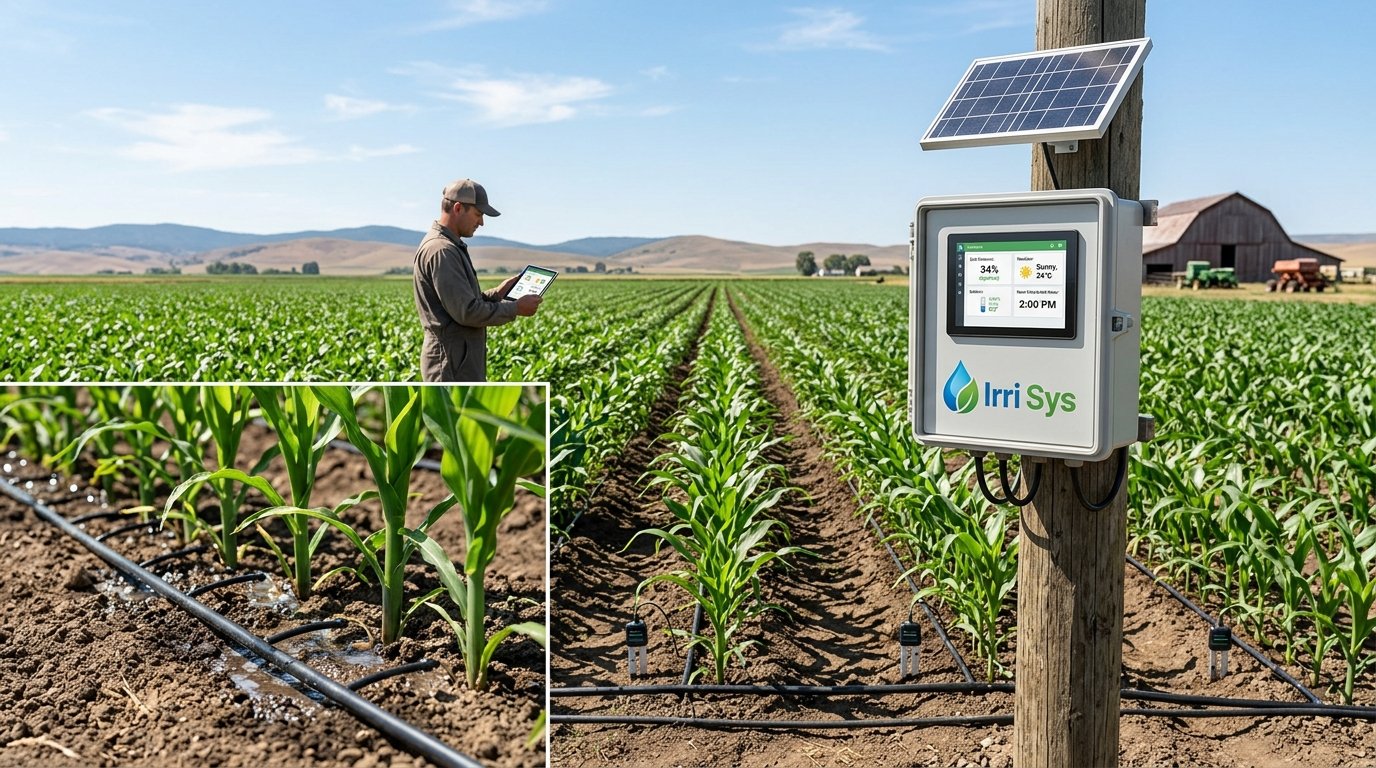
Irri Sys irrigation system is an advanced agricultural irrigation technology designed to improve water efficiency and support Sustainable Agriculture. It combines sensors, data analytics, and automated controls to monitor soil moisture, weather conditions, and crop requirements in real time. By delivering precise amounts of water directly to plant roots, Irri Sys reduces water waste, improves soil health, and increases crop productivity.
The system also supports renewable energy options such as solar power and can be managed remotely through digital platforms. Farmers benefit from lower labor costs, better resource management, and higher yields while reducing environmental impact. Although challenges such as initial setup costs and technical training exist, Irri Sys represents a promising innovation for sustainable farming and long-term food security.
Sustainable Agriculture and Resource Management
Sustainable agriculture and resource management have become increasingly important in recent years as the world faces challenges such as climate change, food insecurity, and depletion of natural resources. In response to these issues, there has been a growing trend towards sustainable agricultural practices that aim to produce food in an environmentally friendly and socially responsible manner.
But what exactly is sustainable agriculture? At its core, sustainable agriculture is a farming system that focuses on long-term productivity while also taking into consideration the environmental, social, and economic impacts of farming practices. It seeks to balance the needs of present-day farmers with those of future generations by minimizing negative impacts on the environment and conserving natural resources.
Resource management In Irri Sys
One key aspect of sustainable agriculture is resource management. This involves using land, water, and other resources efficiently to minimize waste and reduce environmental impact. For example, instead of relying heavily on chemical fertilizers, which can leach into waterways and harm ecosystems, sustainable farmers use methods such as crop rotation or organic fertilizers to maintain soil fertility.
Another crucial element of sustainable resource management is water conservation. With increasing global demand for food production comes a greater demand for water usage in agriculture. However, many areas around the world are facing water scarcity due to factors such as climate change and overuse of groundwater sources. As a result, efficient water management techniques are essential for long-term sustainability.
This is where Irri Sys comes in – a revolutionary irrigation system that maximizes efficiency in water usage while also promoting sustainability in agriculture. By using advanced technology such as sensors and data analytics, Irri Sys optimizes irrigation schedules based on real-time weather conditions and plant needs. This reduces water wastage through over-irrigation while still providing crops with the necessary amount of moisture for healthy growth.
Moreover, Irri Sys also helps minimize energy consumption by utilizing solar power for operation. This not only reduces carbon emissions but also lowers costs for farmers in the long run. Additionally, the system’s precise irrigation capabilities help prevent soil erosion and nutrient leaching, promoting soil health and preserving natural resources.
Sustainable agriculture and resource management are crucial for ensuring a healthy planet and food security for future generations. With innovative solutions like Irri Sys, we can maximize efficiency in agricultural practices while also prioritizing sustainability and environmental responsibility. By adopting these methods, we can work towards a more sustainable future for our planet and those who call it home.
The Role of Irrigation Systems in Sustainable Agriculture
The use of irrigation systems in agriculture has been practiced for centuries, with early civilizations developing various methods to bring water to their crops. However, in recent years, the role of irrigation systems in sustainable agriculture has become increasingly important. With a growing global population and limited resources, it is crucial to maximize efficiency in agricultural practices while also promoting sustainability.
One of the main benefits of utilizing irrigation systems in agriculture is the ability to control and optimize the amount of water used for crop production. Traditional methods such as flood irrigation can result in significant water loss due to evaporation or runoff. In contrast, modern irrigation techniques such as drip or sprinkler systems deliver water directly to the roots of plants, reducing waste and ensuring that crops receive an adequate supply of water.
Furthermore, proper implementation and management of irrigation systems can lead to improved soil health. By delivering water directly to plant roots at consistent intervals, these systems help prevent overwatering and leaching of nutrients from the soil. Additionally, some advanced irrigation technologies can be integrated with fertilization methods, providing crops with essential nutrients while conserving resources.
Efficient use of irrigation systems
In terms of sustainability, efficient use of irrigation systems reduces the need for constant expansion into new land areas for agricultural purposes. This helps preserve natural habitats and biodiversity while also decreasing soil erosion and other negative environmental impacts caused by excessive land use.
Moreover, implementing sustainable agricultural practices through efficient irrigation systems can contribute significantly towards mitigating climate change. By optimizing water usage and improving soil health, these practices reduce greenhouse gas emissions associated with traditional farming methods.
Another vital aspect is the economic impact that effective utilization of irrigation systems has on farmers’ livelihoods. Through efficient resource management and increased yields per acreage, farmers can save on costs related to labor, energy consumption (such as pumping), fertilizer application rates, etc., making their operations more profitable.
However, it is crucial that proper planning and maintenance are carried out when using an irrigation system in agriculture. This includes regular inspection and repair of equipment, monitoring water usage, and adjusting irrigation schedules according to weather patterns and crop needs.
The role of irrigation systems in sustainable agriculture cannot be overstated. By maximizing efficiency, these systems play a crucial part in ensuring food security, preserving natural resources, mitigating climate change, and promoting economic stability in the agricultural sector. As we continue to face global challenges related to population growth and resource scarcity, it is essential that farmers adopt these sustainable practices to secure a better future for all.
What is Irri Sys and How Does it Work?
Irri Sys, short for Irrigation System, is a technological advancement in the field of agriculture that has revolutionized farming practices. It is a combination of hardware and software components that work together to provide an efficient and sustainable irrigation system for agricultural crops.
The primary goal of Irri Sys is to optimize water usage in irrigation by providing precise and accurate data on soil moisture levels, weather conditions, crop water demands, and other relevant factors. This system takes into account both the environmental aspects as well as the individual needs of each crop to ensure maximum yield with minimal resource consumption.
The hardware component of Irri Sys includes sensors that are installed in the fields or greenhouses to collect real-time data on various parameters such as soil moisture, temperature, humidity, and light intensity. These sensors are connected to a central control unit or computer through wires or wireless communication technology like Wi-Fi or Bluetooth. The control unit acts as the brain of the system, receiving data from sensors and using algorithms to analyze and make decisions about when and how much water needs to be delivered to specific areas or crops.
Software aspect of Irri Sys
The software aspect of Irri Sys involves advanced algorithms that process the collected data from sensors and create a detailed map of soil moisture distribution throughout the field. This information helps farmers understand which areas require more water than others, thus enabling them to adjust their irrigation schedule accordingly.
One significant advantage of Irri Sys is its ability to function autonomously without human intervention. Once programmed with specific instructions based on crop requirements, this system can regulate irrigation schedules automatically according to real-time data received from sensors. It also has features like remote access through mobile applications that allow farmers to monitor their fields’ irrigation status even when they are away.
Moreover, Irri Sys also offers farmers options for customized settings based on different types of crops grown in their fields. This feature allows them flexibility in managing multiple fields with different crop varieties efficiently.
Irri Sys is an advanced irrigation system that uses hardware and software components to provide precise and efficient water management for sustainable agriculture practices. Its automated features, remote accessibility, and customizable options make it a valuable tool for modern farming, promoting maximum yield with minimal resource consumption.
Benefits of Using Irri Sys in Agriculture
The implementation of innovative technologies in agriculture has become increasingly important in recent years, with the growing need for efficient and sustainable farming practices. One such technology that has gained significant attention is Irri Sys – an advanced irrigation system that utilizes cutting-edge techniques to optimize water usage and increase crop yield.
In this section, we will explore the various benefits of using Irri Sys in agriculture and how it can contribute to a more sustainable future for farming.
1. Water Conservation:
With traditional irrigation methods, a large amount of water is wasted due to evaporation, run-off, and over-watering. However, the use of Irri Sys eliminates these issues by providing precise amounts of water directly to the roots of plants. As a result, there is minimal water loss, leading to significant conservation of this precious resource.
2. Increased Crop Yield:
The primary goal of any agricultural practice is to produce high-quality crops at maximum efficiency. With its advanced technology and precision irrigation methods, Irri Sys can help achieve just that. By providing plants with the right amount of water and nutrients at the right time, it promotes healthy growth resulting in higher yields.
3. Improved Soil Health:
Over-watering not only wastes water but also leads to soil erosion and compaction, making it less fertile for plant growth. Irri Sys helps prevent these issues by providing just enough moisture for plants without causing damage to the soil structure. This promotes healthier soil conditions essential for long-term sustainability.
4. Reduced Labor Costs:
Traditional irrigation systems require manual labor for installation and maintenance, which adds up significantly as labor costs continue to rise. In contrast, Irri Sys operates automatically through sensors and controllers, reducing the need for constant human intervention. This saves both time and money while increasing overall efficiency on farms.
5. Customization Options:
Every farm has unique topography and varying crop requirements; thus one-size-fits-all approaches do not work effectively in agriculture. Irri Sys offers a range of customizable options, such as specific watering schedules and precise water delivery, to suit the needs of different crops and soil types. This results in improved crop health and reduced wastage.
The benefits of using Irri Sys in agriculture cannot be overlooked. From conserving water to increasing crop yields, promoting healthy soil conditions and reducing labor costs, it is a game-changer for sustainable farming practices. Its advanced technology provides a win-win situation for both farmers and the environment by maximizing efficiency while minimizing resource wastage.
Case Studies: Real Life Examples of Successful Implementation
Case studies are an essential part of understanding the practical application and success of any concept or technology. In this section, we will explore some real-life examples of how Irri Sys has been successfully implemented in sustainable agricultural practices.
1) The Davao City Farms, Philippines:
In this case study, the use of Irri Sys was instrumental in transforming traditional farming practices into a sustainable and efficient system. The farmers were able to switch from manual irrigation methods to automated ones, which helped them save time and effort. The accurate water distribution also led to better crop yield and reduced water wastage.
2) Maasai Community, Kenya:
The Maasai community has long relied on livestock rearing for their livelihoods. However, with changing climate patterns, access to water became a major challenge for them. With the help of Irri Sys, they were able to set up drip irrigation systems that not only provided water for their cattle but also enabled them to grow crops such as maize and beans. This has significantly improved their food security and reduced their dependency on livestock alone.
3) Greenfield Farms, USA:
Located in California’s drought-prone areas, Greenfield Farms faced significant challenges when it came to irrigation. With the help of Irri Sys technology, they were able to reduce their water usage by 30%, leading to significant cost savings. Additionally, the system’s precision allowed them to tailor irrigation according to specific crop needs resulting in healthier plants with higher yields.
4) Palawija Agricultural Co-Op Society Ltd., Indonesia:
This co-op society was struggling with low productivity due to inconsistent rainfall patterns in their region. After implementing Irri Sys technology for drip irrigation and fertigation (fertilizer application through irrigation), they saw a 20% increase in rice yield while using 40% less water than before.
5) Mansehra Farming Project, Pakistan:
In this case study, Irri Sys was used to improve irrigation practices in a hilly region where water scarcity and soil erosion were major challenges. With the installation of drip irrigation systems, farmers were able to grow crops such as potatoes and vegetables successfully. The use of fertigation also led to significant improvements in soil health and crop quality.
These case studies demonstrate the versatility and effectiveness of Irri Sys in promoting sustainable agricultural practices globally. From improving water usage efficiency to increasing crop yields, this technology has proven to be a valuable tool for farmers facing various challenges. By adopting Irri Sys, farming communities can not only achieve economic benefits but also contribute towards environmental preservation by reducing water wastage and promoting efficient resource utilization.
Challenges and Limitatio ns of Irri Sys
While Irri Sys has proven to be a valuable tool in promoting sustainable agricultural practices, it is not without its challenges and limitations. In this section, we will discuss some of the major issues that farmers may face when using this system.
1. High Initial Investment Cost
One of the biggest obstacles for small-scale farmers looking to adopt Irri Sys is the high cost associated with setting up the system. This includes purchasing equipment such as pumps, pipes, and controllers, as well as installation costs. This initial investment can be a deterrent for many farmers who may not have the financial resources to make such a significant upfront payment.
2. Maintenance and Repair Costs
In addition to the initial investment, there are also ongoing maintenance and repair costs that come with operating an Irri Sys. The technology used in these systems can be complex and requires regular upkeep to ensure optimal performance. Any malfunction or breakdown can result in additional expenses for repairs or replacements.
3. Technical Knowledge and Training
Irri Sys relies heavily on technology, which means that users must have a certain level of technical knowledge and skills to operate it effectively. Farmers without prior experience or training may struggle with understanding how to use the system properly, leading to inefficiencies or even damage if not handled correctly.
4. Dependence on Electricity
Another limitation of Irri Sys is its reliance on electricity for operation. In areas where power supply is inconsistent or limited, farmers may face difficulties in utilizing their systems effectively. This could significantly impact crop growth if irrigation schedules are disrupted due to power outages.
5. Water Availability
The success of any irrigation system depends largely on water availability, especially during times of drought or water scarcity. If there is insufficient water supply in the area, even the most efficient IrruSys will not be able to sustain crop growth.
6 . Environmental Impact
Some critics argue that while Irri Sys may help increase efficiency and productivity, it also has negative impacts on the environment. The use of pumps and other equipment can contribute to greenhouse gas emissions, and the overuse of water in irrigation can lead to soil salinization and depletion of freshwater resources.
Despite these challenges and limitations, Irri Sys remains a valuable tool for promoting sustainable agricultural practices. By addressing these issues through proper maintenance, training, and careful consideration of environmental impacts, we can continue to harness the benefits of this technology while minimizing potential drawbacks.
Future Possibilities and Advancements in the Field
The future possibilities and advancements in the field of sustainable agricultural practices are constantly evolving and advancing. With the increasing need for sustainable food production to feed a growing global population, there is a constant push for innovation and improvement in farming methods. This is where Irri Sys plays a crucial role.
One of the most exciting developments in the field is precision agriculture, which involves using technology such as sensors, GPS mapping, and drones to gather data on crop health and soil conditions. This information can then be used to tailor irrigation systems, fertilization schedules, and other farm management practices specific to each section of land. This approach can greatly increase efficiency by minimizing water usage and reducing waste.
Another area of potential advancement is in the use of smart irrigation systems that utilize artificial intelligence (AI) algorithms to analyze real-time weather data and adjust watering schedules accordingly. These systems can also take into account factors such as soil moisture levels, plant types, and growth stages to optimize water usage. With AI becoming increasingly sophisticated, these systems have the potential to greatly improve irrigation efficiency while reducing costs for farmers.
Furthermore, advancements are being made in the development of drought-resistant crops through genetic modification techniques. These crops are specifically designed to thrive in dry conditions with minimal water requirements while still producing high yields. This could be a game-changer for farmers who struggle with water scarcity or irregular rainfall patterns.
Technological advancements In Irri Sys
In addition to technological advancements, there has been a shift towards more sustainable farming practices such as conservation tillage and cover cropping. These methods help reduce erosion and maintain soil health by leaving crop residue on fields instead of tilling it under. This not only contributes to better soil quality but also reduces water runoff during heavy rain events.
There are also ongoing efforts towards developing new methods for recycling wastewater from agricultural activities for irrigation purposes. By treating wastewater before reusing it on crops, this practice can help conserve precious freshwater resources while providing essential nutrients for plant growth.
Research is being conducted on the use of alternative sources of energy for powering irrigation systems, such as solar and wind power. This could greatly reduce the carbon footprint of agriculture while also cutting down on operational costs for farmers.
Irri Sys plays a vital role in maximizing efficiency and sustainability in agriculture. With continuous advancements in technology, farming practices, and alternative energy sources, there are endless possibilities for improving irrigation systems and promoting sustainable agricultural practices. It is crucial to continue investing in research and development to ensure a more sustainable future for our planet’s food production.
Importance of Adopting Sustainable Practices like Irri Sys for a Greener Tomorrow
It is evident that sustainable agricultural practices are crucial for our planet’s future. With the growing population and increasing demand for food production, it is more important than ever to adopt sustainable methods such as using Irri Sys. This advanced irrigation system not only maximizes efficiency but also promotes environmental sustainability.
One of the primary benefits of adopting Irri Sys in agriculture is its water-saving feature. As mentioned earlier, traditional irrigation methods tend to be wasteful and can lead to over-watering, which can harm crops and deplete groundwater resources. However, with Irri Sys, farmers can precisely control the amount of water needed by their crops through sensors and automation technology. This not only saves water but also reduces energy consumption and operational costs.
Irri Sys minimizes soil erosion
Moreover, using Irri Sys also minimizes soil erosion and nutrient loss. By delivering water directly to the roots of plants instead of flooding entire fields, soil erosion is reduced significantly. Additionally, this system allows farmers to apply fertilizers precisely where they are needed instead of blanket application across the entire field. This helps in conserving nutrients in the soil and prevents them from leaching into nearby water sources.
Another crucial aspect of sustainable agriculture is reducing greenhouse gas emissions. According to a study by the Environmental Protection Agency (EPA), agriculture accounts for 9% of total greenhouse gas emissions globally. However, with technologies like Irri Sys that promote efficient use of resources such as water and fertilizer, these emissions can be significantly reduced.
Furthermore, adopting sustainable practices like using Irri Sys can also have economic benefits for farmers. By reducing operational costs through efficient resource management and increasing crop yields through optimal irrigation techniques, farmers can see an increase in their profits.
Implementing sustainable practices in agriculture is essential for preserving our planet’s natural resources while meeting the growing demand for food production. Technologies like Irri Sys play a crucial role in achieving this goal by promoting efficient resource management and reducing environmental impacts. It is up to us, as consumers and farmers, to embrace these practices for a greener tomorrow. Let us take the first step towards sustainable agriculture with Irri Sys and pave the way for a healthier and more sustainable future.